
Teaching Future Early Childhood Educators through
Music, Gamification, & Creativity
Singing/ hand signals demonstration

London bridge is falling down
Famous song with wide keyboard range, simple rhythm
(a)Singing with hand signs
簡單的重複旋律
(g)Improvisation
該主題適合學生用樂器創作歌曲或節奏
A sense of pulse
歌曲的節奏明顯,活潑歡快
A sense of duration
有出現明顯的長短音
A sense of tempo
歌曲主要以allegro和andante為主
A sense of pitch
歌曲為2/4拍,出現二分音符,四分音符,附點節奏等
A sense of dynamics
歌曲有輕微大小聲區別,但不是很明顯
A sense of structure
音樂中有明顯的開始和停頓
A sense of timbre
可以使用樂器伴奏
A sense of texture
歌曲中無明顯的樂器伴奏,人聲較為明顯
A sense of style
該歌曲為幼兒歌曲,節奏輕快
Objectives:
After class, students can relate hand signs with notes
Activities:
1. Introduction
To let children understand hand signs can present notes
2. Understand hand signs
Teacher show hand signs and invite children follow, children learn hand signs by doing
3. Present songs with hand signs
Show the soundtrack to the children, then sing the notes with them(show paper notes if necessary). Afterward present hand notes with children. Finally ask them to play alone.
4. Conclusion
Teacher show that hand signs can present notes, and than ask children to present specific notes
Assessment:
- Assessment the participation of children
- Assess the accuracy when teacher ask them to play specific notes at the end of the class
Materials Needed:
- Paper notes(with notes)(use if necessary)
Supplementary Resources:
- PPT(with hand signs and notes)
Suitable classroom environment
--------------------Alternative Plan-------------------------
Objectives: 令幼兒能跟上音樂做出音符手勢
Activities:①先讓幼兒聼一邊音樂
②老師先教導音符手勢
③邀請幼兒跟著老師音符手勢
④幼兒跟著老師看著ppt上的音符逐句完成
⑤幼兒跟著老師清場的音樂完成
Assessment:教完之後,老師提問音符,讓幼兒做出音符手勢,在ppt上顯示三個音符,讓幼兒做出來
Materials Needed: mp4歌曲,ppt
Supplementary Resources: no
--------------------Alternative Plan------------------------------
Objectives: 讓幼兒認識不同的唱名可以透過手勢來表達出來
Activities: 首先,在上課開始時問小朋友一些有關於音樂的問題來作引入,如問小朋友平時會不會聽音樂之類的問題;之後在課堂上教小朋友認識什麼是音名及唱名,然後老師再教唱名手勢,並叫小朋友一起唱出唱名音符的順序,再慢慢一個一個手勢去教小朋友,每個手勢教完後再完整地重複一次唱名手勢,隨後老師隨機做一些手勢/在PPT上可以放上一些不同的手勢來讓他們回答,看他們是否真的明白手勢相應的唱名,之後老師唱出歌曲和做一次要教的歌曲內容及一句一句的教小朋友這首歌曲的唱名和手勢,接著再一起把整首歌的唱名手勢完整地完成。最後,老師亦可在小朋友熟悉唱名手勢後,與他們進行一個小遊戲,讓他們分成兩組來演繹歌曲,例:第一組是負責1、3句的唱名手勢,第二組是負責2、4句的唱名手勢。老師亦可在遊戲結束後再重複一次唱名及唱名手勢的內容,再進行一個課堂的總結。
Assessment:在下課前,老師逐個小朋友問他們不同的唱名,並叫他們做出對應的手勢;如果小朋友做不出來,老師就提示他們對應的手勢,並再重複一次唱名手勢的順序
----------------------Alternative Plan-------------------------
Objectives:
藝術IIB — 1 — 3
能以準確的唱名、音高和節奏歌唱,並能與同學作二部輪唱及異曲同唱,享受箇中樂趣
體育B — 2 — 5
能完成簡單的組合動作
藝術IID — 1 — 5
運用不同聲源、聲響類型等進行簡短的聲響創作,以表達不同的情境及氣氛
學生可以唱出準確的唱名,可以根據音樂做出準確的手勢,能夠利用樂器自行創作簡單的音樂
Activities:
-
學生學習唱名和手勢
-
全班同學分成兩組,輪流交替進行
-
邀請學生創作音樂片段
Assessment:
-
全班學生完整展示
-
老師隨機抽取唱名,學生回答
-
根據學生創作的音樂片段,學生分辨出唱名和手勢
Materials Needed: Speaker,PPT
Supplementary Resources: 無
Teaching Procedure:
-
老師先一句一句的唱詞,可以帶著動作展示(更容易記憶),學生跟著
-
後將班級學生分成兩組,每一組唱一句,交替進行(確認學生是否跟上進度)
-
教師展示唱名和手勢,學生先跟著學習
-
學生自己做,老師檢查學生是否學會
-
老師展示這首歌重點的手勢,學生跟著練習
-
唱名和手勢結合,老師先一句一句的教(放慢速度)(注意是否有學生跟不上)
-
學生分成兩組,每組一句,交替進行
-
全班完整展示
-
老師隨機抽取唱名,學生回答
-
邀請學生用樂器創作一小段音樂,其他同學根據音樂做出手勢說出唱名。
----------------------Alternative Plan-------------------------
Objectives: 學生能夠根據唱名做出相應的手勢
Activities:
老師教唱名和手勢,學生學習
學生分成兩組,輪流展示(歌詞+手勢)
Assessment:
學生可以回答出唱名的手勢
學生展示
Materials Needed: Speaker,PPT
Supplementary Resources: 音樂
-------------------Alternative Plan------------------------
-
Objective:讓學生從一些耳熟能詳的兒歌中,學習hand sign、拍節奏及唱出音樂中的唱名(Solfege),到最後能一邊唱出整首歌的歌詞,一邊做出相對應的hand sign。
-
Activities:
-
Opening activity: 老師先把這首歌分四個部分,讓學生分別拍打這四個部分的節奏。
-
Pre-assessment: 學生熟悉了這首歌的節奏後,老師在ppt上展示八分音符、附點四分音符、四分音符的模樣,並教導學生其意思,之後會帶領學生一起以solfege分別唱出這四個部分。
-
Content & key points: 學生熟習了這首歌的音名及節奏後,老師會教學生hand sign。
-
Main activity: 熟悉了所有的hand sign後,老師會教導學生歌詞及其意思,並一邊做hand sign一邊讀出歌詞。
-
Assessment:最後,學生一邊唱出歌詞,一邊做hand sign。老師會從中記錄那些學生做錯hand sign。
-
Engagment:老師會在教授的過程中,詢問學生對歌詞內容的理解,並糾正他們理解錯誤的地方。
-
Materials Needed: 音響、ppt
-
Supplementary Resources: N/A
Feedback: 在課堂的最後給予學生讚美:「你們都做得很對,唱得很好!」
-----------------Alternative Plan--------------------
Objectives:
Ø 教導幼兒認識樂譜中的唱名,以及能夠唱出這首歌曲,另外還可以跟隨音樂做出唱名的對應手勢。
Activities:
Ø 在課堂開始的時候,老師會先示範唱一次,這首歌曲是如何唱以及手勢是如何做的,首先會放慢速度教他們手勢,從do到la的手勢,同時配合鋼琴彈do到la的音,令他們更能感受到不同音的分別,使他們更加易記憶,再配合一些小遊戲(圖一),使記的過程變得有趣。
Ø 然後就會學習London Bridge is falling down這首音樂的旋律,再配合手勢,最後才教歌詞。學習旋律時,老師會邊彈邊唱,幼兒也需跟唱,同時配合歌詞的解釋,讓幼兒更好的記憶旋律同時唱出。
Ø 因為London Bridge is falling down這首歌會有三段不同的歌詞,但是旋律都是一樣的,因此會分段教會他們後,再整首歌慢速配合手勢唱兩次,最後加快速度唱一次。
Assessment:
Ø 幼兒能用心觀察老師的示範
Ø 幼兒能正確地做出do到la的手勢動作
Ø 幼兒能勇躍地跟隨老師唱出歌詞
Mary Had a Little Lamb
Characteristics of the Song:
A sense of pulse
- The beat of the song is very stable
- There is no dotted rhythm, so is easy to follow
A sense of duration
-
4/4 time
A sense of tempo
- The tempo is reasonable for kindergarten children
- The teacher can sing of his/her own (so that the tempo can be set by the teacher according to the situation of the class)
A sense of pitch
- The song only has Do Re Mi So
- The notes are in the lower section of the 8 notes in an octave, so will not be too hard to sing
A sense of dynamics
- This song does not have a clear dynamic change
A sense of structure
- The first and the third line of the song is repeated
- ABAC form
A sense of timbre
- Delightful
A sense of texture
- Monophonic texture
A sense of style
- Folk music
Teaching Notes & Process
Hand signals scene explanation :
Do is like a seed. (The seeds are in the ground, so we put our hands in a lower position, in front of the belly).
Re is root (from seed to root).
Mi is soil/land.
Fa is a leaf.
So is a flower.
La is a taller flower.
Ti is rain.
Do (octave) is cloud.
The whole scene of all the hand signs is the rain helping the plants grow from seeds to flowers. Since the plants grow taller, our gestures are also from low to high, from belly to head.
Teaching process:
1. The teacher first asks the class whether the students remember the hand sign we learned in the previous class.
2. Then the teacher will lead the class to revise all 8 hand signs twice.
3. A story plot is added in this place: The teacher has a friend called Mary. Her pet sheep is not happy recently, and she wanted to make some music to cheer it up. So Mary asked the teacher whether our class can help Mary out.
4. The teacher will then introduce the song “Mary Had A Little Lamb” with some interesting gestures, and invite the children to follow the dance and sing together.
5. After that the teacher will mainly practice Do, Re, Mi, So in a game, because the song only has Do, Re, Mi, So in it. (Mi Re Do Re Mi Mi Mi, Re Re Re Mi So So, Mi Re Do Re Mi Mi Mi Do, Re Re Mi Re Do).
6. Game 1: The teacher will randomly mix the order of Do, Re, Mi, So, if the teacher says Do, the students will need to do the Do hand sign as soon as possible. The teacher will increase the speed to make the game more fun.
7. When the teacher sees the whole class is well practiced within the game, the teacher will add hand signs to “Mary Had A Little Lamb” with the children. But this time is not singing the lyrics but singing the note names. Ex. “Mi Re Do Re Mi Mi”.
8. The teacher will sing and practice the note names with hand signs version twice with the class.
9. Then introduce Game 2.
10. Game 2: The whole class divides into two groups (group A and group B). Group A first starts singing the first line of “Mary Had A Little Lamb” with hand signs (Mi Re Do Re Mi Mi Mi). Group B then follows up with the second line (Re Re Re Mi So So). Two groups will continue swapping until the whole song is finished. After the song is played once, the two groups will change their order. So everyone in the class will have a chance to sing and do every line in the song.
11. The teacher will round up the class by affirming the children’s effort, and say that Mary’s sheep really enjoyed their song. The sheep is no longer unhappy now and thanks for their help.
12. The class ends here.
* The teacher’s role in Game 2 will be less than the previous games. The teacher will just demonstrate the start of the song. The class will sing the whole song with hand signs on their own. *
Objective
Overall objective: The students can do the correct hand signs according to the music notes in the song.
知識 Cognitive:
1. The children can sing “Mary Had A Little Lamb”.
2. The children can remember correct hand signs according to the notes.
3. The children can sing with hand signs.
情意 Affective:
1. The children can merrily sing the song with gestures.
2. The children will not give up even though the level of game goes up.
3. The children are willing to teach their classmates if they are not sure about the hand signs.
技能 Psychomotor:
1. The children can imitate and follow the teacher’s hand signs
Activities Assessment
Exit Ticket:
-
Before the students end the lesson, the teacher can form a ‘music tunnel’ for the children to pass through. They can pass only if they can do the correct hand sign named by the teacher.
Materials Needed
- One PPT slide with a picture of a farm and sheep on it. (Help the children to easier get into the mood)
-------------------Alternative Plan--------------------------
Objectives:
1.學生能掌握所學歌曲的唱名
2.學生要學會 hand signals,能流暢地做出手勢,並能結合兒歌做出手勢。
Activities:
主題:魔法世界
音名是咒語,在念咒的同時要有對應的手勢才能發動魔法。
本堂學要發動的魔法是要正確地念出 Mary Had a Little Lamb 的唱名和做出正確的手勢
1.先介紹每個音樂唱名所對應的手勢。
2.帶領學生順序做出手勢(向上和向下)
3.先播放歌曲,讓學生對歌曲有初步的認識。
4.分段教學生歌曲中的唱名。
5.結合手勢分段唱出歌曲。
6.完整唱出歌曲和做出手勢。
7.給予反饋,然後再做一次。
Assessment:
1.隨機抽取學生順序做出手勢
2.將學生分成若干組,然後每組學生做對應段落。
Materials Needed:
1.歌曲的音源
2.PPT(手勢)
-----------------------Alternative Plan--------------------
Teaching Notes & Process
Hand signals scene explanation :
Do is like a seed. (The seeds are in the ground, so we put our hands in a lower position, in front of the belly).
Re is root (from seed to root).
Mi is soil/land.
Fa is a leaf.
So is a flower.
La is a taller flower.
Ti is rain.
Do (octave) is cloud.
The whole scene of all the hand signs is the rain helping the plants grow from seeds to flowers. Since the plants grow taller, our gestures are also from low to high, from belly to head.
Teaching process:
1. The teacher first asks the class whether the students remember the hand sign we learned in the previous class.
2. Then the teacher will lead the class to revise all 8 hand signs twice.
3. A story plot is added in this place: The teacher has a friend called Mary. Her pet sheep is not happy recently, and she wanted to make some music to cheer it up. So Mary asked the teacher whether our class can help Mary out.
4. The teacher will then introduce the song “Mary Had A Little Lamb” with some interesting gestures, and invite the children to follow the dance and sing together.
5. After that the teacher will mainly practice Do, Re, Mi, So in a game, because the song only has Do, Re, Mi, So in it. (Mi Re Do Re Mi Mi Mi, Re Re Re Mi So So, Mi Re Do Re Mi Mi Mi Do, Re Re Mi Re Do).
6. Game 1: The teacher will randomly mix the order of Do, Re, Mi, So, if the teacher says Do, the students will need to do the Do hand sign as soon as possible. The teacher will increase the speed to make the game more fun.
7. When the teacher sees the whole class is well practiced within the game, the teacher will add hand signs to “Mary Had A Little Lamb” with the children. But this time is not singing the lyrics but singing the note names. Ex. “Mi Re Do Re Mi Mi”.
8. The teacher will sing and practice the note names with hand signs version twice with the class.
9. Then introduce Game 2.
10. Game 2: The whole class divides into two groups (group A and group B). Group A first starts singing the first line of “Mary Had A Little Lamb” with hand signs (Mi Re Do Re Mi Mi Mi). Group B then follows up with the second line (Re Re Re Mi So So). Two groups will continue swapping until the whole song is finished. After the song is played once, the two groups will change their order. So everyone in the class will have a chance to sing and do every line in the song.
11. The teacher will round up the class by affirming the children’s effort, and say that Mary’s sheep really enjoyed their song. The sheep is no longer unhappy now and thanks for their help.
12. The class ends here.
* The teacher’s role in Game 2 will be less than the previous games. The teacher will just demonstrate the start of the song. The class will sing the whole song with hand signs on their own. *
Objective
Overall objective: The students can do the correct hand signs according to the music notes in the song.
知識 Cognitive:
1. The children can sing “Mary Had A Little Lamb”.
2. The children can remember correct hand signs according to the notes.
3. The children can sing with hand signs.
情意 Affective:
1. The children can merrily sing the song with gestures.
2. The children will not give up even though the level of game goes up.
3. The children are willing to teach their classmates if they are not sure about the hand signs.
技能 Psychomotor:
1. The children can imitate and follow the teacher’s hand signs
Activities Assessment
Exit Ticket:
-
Before the students end the lesson, the teacher can form a ‘music tunnel’ for the children to pass through. They can pass only if they can do the correct hand sign named by the teacher.
Materials Needed
- One PPT slide with a picture of a farm and sheep on it. (Help the children to easier get into the mood)
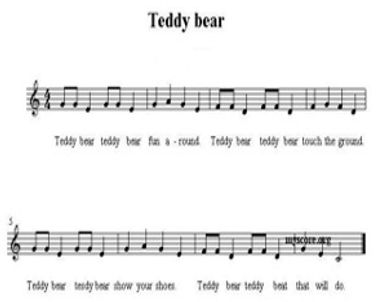
Teddy Bear
此歌為較簡單兒歌,旋律簡單、重複,幼兒更容易適應並加入手勢。
Objective:
1)幼兒能感知到歌曲節奏
2)幼兒能用唱名唱出完整歌曲
3)幼兒能邊唱名唱出歌曲同時配合唱名手勢
Activities:
引入:事前讓幼兒帶心愛的洋娃娃回校。並告知幼兒今天老師邀請小朋友一同做小小指揮家,哄他們喜歡的洋娃娃睡覺。
發展:
1)播放歌曲,讓幼兒熟識一下歌曲。
2)老師帶領幼兒唱一次,熟悉歌詞,並示範如何哄洋娃娃睡覺。
3)播放音樂讓幼兒拿起自己的洋娃娃,跟老師再唱一次,小朋友都熟悉歌曲,成功哄洋娃娃睡覺,才能當一名指揮家,為大家指揮。
4)接下來老師利用PPT展示琴譜並使用鋼琴彈奏,逐個音用唱名唱一次,幼兒跟隨。
5)利用幼兒已有認知,考考他們能否記得剛剛唱的音分別應該配合什麽手勢。
6)展示出有手勢圖案的琴譜,慢慢地把歌曲每個音和手勢連起,完成歌曲。(助教老師負責彈琴,主教負責帶領)
7)邀請幼兒(5-6名)站到老師旁,成爲小小指揮家帶領同學一起唱和做手勢,完成小小指揮家的任務。
總結:重複問幼兒每個音分別應該用什麽動作作總結。
Assessment:觀察幼兒能否做出正確的手勢,可以將小小指揮家任務成果拍下,記錄幼兒展現能力和對手勢的熟練程度。
Materials needed:
Song: Teddy Bear
https://www.youtube.com/watch?v=iDVJZlr3LM0
PPT
洋娃娃
鋼琴

SING SOLFEGE WITH SUZIE SUNSHINE-KIDS SONGS-KODALY HAND SIGNS-PRESCHOOL/KINDERGARTEN
The music concept of this song is to listen and respond to music in different styles. The song provides different pitches with different hand signals. Hand signs allow children to recognize and see the height or depth of the pitch.
Objectives:
-
Students can identify the difference between the height and depth of the pitch.
-
Students can identify the different hand signals of solfège.
-
Improves students' sense of pitch.
Activities:
-
Before playing the music clips about solfège, teachers will show how the hand signals do with saying the solfège(do re mi fã so la ti) and students need to follow the teacher's hand signals.
-
Later, the whole class will listen to music clips with solfège twice and do the hand signals together with the teacher.
-
Next, there is a simple game, there will be several musical scales on the pictures, such as “do mi so do so mi do”. Students need to do the hand signals by seeing the scales. (“do mi so do mi so do” this scale will be given the so fa name to the students)
-
In an advanced game, the teacher demonstrates a hand signal like “do”, and the students have to identify which scale it represents and raise up their hands to answer the correct so fa name.
-
According to the students' level, the teacher can increase the difficulty level which can perform the hand signals in a two to three non-linear sequence ( so re/ do so la) to let students familiar with the so fa name and answer the so fa name correctly.
Assessment:
-
Assessing Through Musical Games
-
Observe whether students can identify all hand signals.
-
Observe the students’ participation and performance during the activities.
-
Materials Needed:
-
Music clips (solfège)
-
Pictures with musical scales
Supplementary Resources:
-
The picture with musical scale (do mi so do mi so do)